Efficacy data for
SKYCLARYS

SKYCLARYS was shown to slow disease progression—lessening physical impairment
At 48 weeks, the study showed a difference of -2.41 points in the mFARS scores of patients
in the SKYCLARYS group compared to patients in the placebo group.1
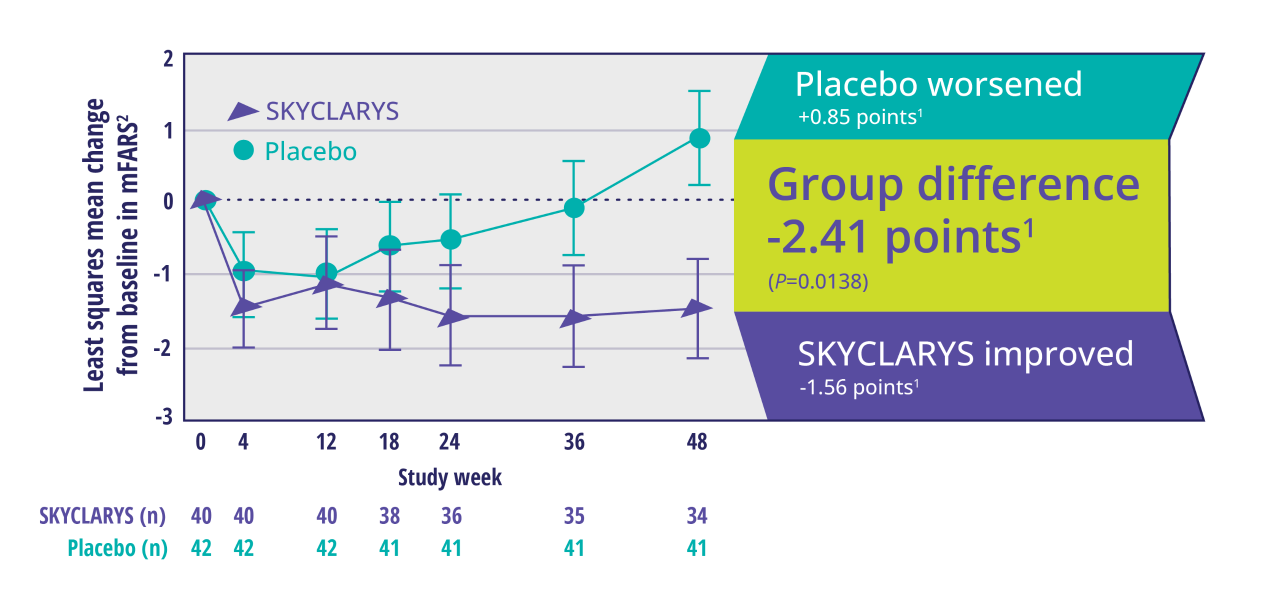
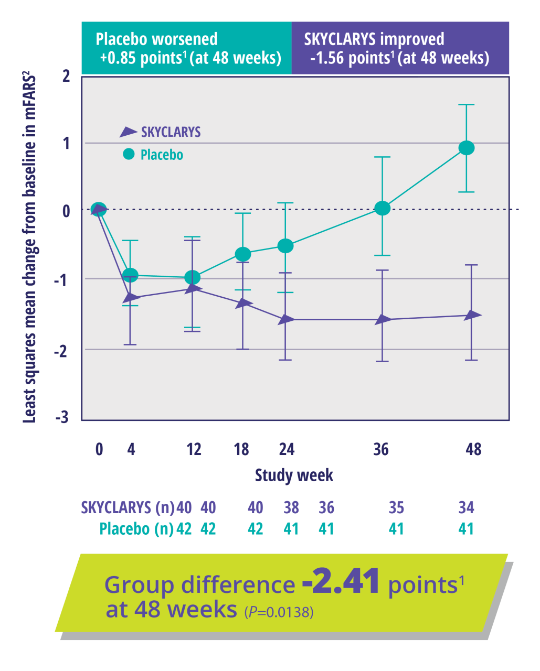
In the Full Analysis Population of patients without pes cavus (n=82).
Learn how results were measured
Results from the MOXIe trial were measured using the modified Friedreich Ataxia Rating Scale (mFARS), a neurological assessment generally accepted as a clinical trial endpoint due to its correlation with disease progression.3
The mFARS measures a patient’s functional abilities in 4 areas3:

Upper limb coordination

Upright stability

Lower limb coordination

Bulbar function
Results from patient subgroups numerically favored
SKYCLARYS over placebo regardless of4:

Age

Sex

GAA repeat
length

Ambulatory
status

Presence of
pes cavus
All 4 components of the mFARS assessment numerically favored SKYCLARYS over placebo4
The greatest effects were on upper limb coordination, which has been linked to the ability to perform many activities of daily living, followed by upright stability, which defines important clinical milestones such as loss of ambulation.5,6
The MOXIe trial was not powered to detect a statistically significant difference among subgroups.4